1. What is a trade association?
Trade Association Case Study: The U.S. Chamber of Commerce
The U.S. Chamber of Commerce was founded in 1912 and promotes pro-business issues via lobbying efforts at the national level. It operates with a voluntary membership system and relies on membership dues as its primary source of revenue.5
While the Chamber does not have a direct role in creating laws or regulations, it is often very effective in influencing regulators and legislators with their organized lobbying efforts. The U.S. Chamber is by far the largest business lobbying group in the U.S., spending more money than any other lobbying organization on an annual basis.6 InfluenceMap released briefings in 2022 and 2023 demonstrating how the Chamber obstructs climate policy.
Some of their historical positions include publicly opposing the Paris Agreement in 2015 (taking until 2018 to make a public statement supporting it), suing the Obama Administration to block the Clean Power Plan, and successfully lobbying both the Senate and EPA on several other environmental matters such as offshore drilling, ambient air pollution, and the Clean Water Act.7 They have consistently obstructed Environmental Justice progress, which is detailed in Change the Chamber’s 2023 report.
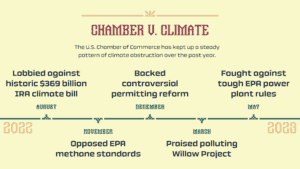
The Chamber’s anti-climate positions are increasingly out of step as climate-fueled catastrophes are more frequent and severe. The association’s opposition to historic climate legislation and environmental regulations over the last year prove that they continue to be a major political obstacle to climate progress. That’s why ClimateVoice is calling on pro-climate member companies to Escape the Chamber now.
For more context about this campaign read the Washington Post’s reporting “Climate group pushes Big Tech to exit nation’s largest business lobby.”