Update from Deb · 3/10/26
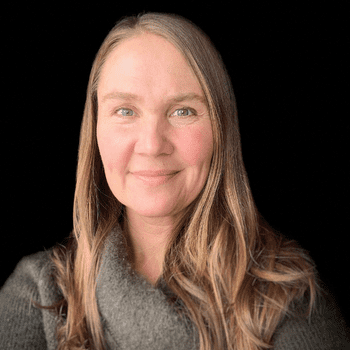
Deborah McNamara
Executive Director
What Lies Ahead for Corporate Political Responsibility + Climate Policy Advocacy
2026 marks ClimateVoice’s fifth anniversary as an official nonprofit organization — and in many ways, the stakes have never been higher. Bill Weihl, ClimateVoice’s Founder and Chief Strategic Advisor, had a clear vision after leaving his roles in corporate sustainability at Google and Facebook: What if the most influential companies could align stated values and goals with their lobbying and political activities? What if companies could play a key role in advancing public policies that would address the threats of climate change at speed and scale? Bill brought an organization into being with a laser focus on urging companies to use their voice — and influence — to shape policy outcomes that support the clean energy transition, reduce polluting emissions, and mitigate existential climate risks.
Five years later, ClimateVoice remains steadfast in our efforts to promote corporate political responsibility, defend climate policies, demand stronger climate policy leadership, and scale employee action. While climate action and the clean energy transition have taken big hits in recent years, our collective work moves forward thanks to the incredible resolve and determination of those of you willing to step up and speak up, despite the risks.
ClimateVoice was founded on the ideal that a public-private partnership was not only possible, but could play an essential role in solving the most pressing challenges facing our country and world. Yet today, we are faced not only with large companies and powerful trade groups lobbying to obstruct climate policy progress, but also with outright climate denialism now dominating U.S. policies.
Companies once seen as allies and leaders in the corporate social and political responsibility space are now faced with daily ethical dilemmas, often remaining silent in the face of ongoing anti-climate efforts as well as democratic backsliding and the rise of authoritarianism. Our work must now expand beyond the existential risks posed by climate change to also consider the existential risks to our democratic systems and values.
In February, I wrote about the current issues at play: Business cannot stay silent on American democracy and climate. Too many companies are upholding a narrative that they are “apolitical,” citing this as a primary reason for silence, yet policy decisions — and associated lobbying by trade groups and companies — have led us to the realities we now face.
The possibility of a public-private partnership was front and center at the time of ClimateVoice’s founding. While that potential has been fractured, we know that so many of you are working on the inside to keep this vision alive. Employees, sustainability professionals, and business leaders are now faced with a critical inflection point. Companies should be weighing carefully what role corporate political responsibility still has — and consider the very real and long-term costs of inaction and silence at this moment.
Companies are indeed facing new risks and opportunities as employees, investors, shareholders, and communities respond to emerging trends. Some companies have appeared to backtrack their commitments to climate action, while others are doubling down on their commitments and moving full steam ahead with ushering in a new era that is responsive to both people and the planet. The B Corp movement stands out as a key example — with efforts underway to integrate policy advocacy as a critical component of B Corp Certification. These companies recognize that as corporate influence in politics grows, so does public scrutiny. The new standards acknowledge this business influence and require companies, especially larger global corporations, to have a public policy on responsible lobbying.
Built into ClimateVoice’s theory of change is the role of employees in driving internal organizational transformation — and playing a key role in impacting systemic change. The majority of employees — nearly two-thirds according to Deloitte’s latest research — say their employers are not doing enough to address climate change and sustainability, with a growing number of employees pushing their companies to do more. Five years into our mission, social change efforts are solidly underway to challenge companies and their social and political footprints. Employees and company insiders are playing a key role in shaping corporate behavior and play a critical role in keeping companies and their leaders accountable to employees, shareholders, and the general public.
As employees from Microsoft and Alphabet recently wrote, despite headwinds employee climate engagement is surging. A global coalition of organizations launched this past year in order to better support employee climate action: The Employee Climate Action Network. Co-led by ClimateVoice, this global network empowers employees to drive climate action within their workplaces.
And employees aren’t just organizing around climate issues. This year, employees across tech companies launched a new initiative to push back against Big Tech’s role in the violence inflicted by ICE operations in American cities. In 2025, Walmart employees pressed CEO Doug McMillon to stand up to the administration’s diversity, equity, and inclusion rollbacks. Salesforce CEO Marc Benioff called for the National Guard in San Francisco, and had offered Salesforce’s services to help ICE, and was immediately greeted with a Board resignation and a mass letter of protest from current and former Salesforce employees — leading to a public apology from Benioff. Tech workers at Microsoft refused to build surveillance tools, protesting the use of Azure cloud and AI technology by Israel’s military for mass surveillance of Palestinians. Employee advocacy on the issue led to Microsoft halting a major contract with the Israeli military — confirming its technology is not to be used for mass surveillance of civilians.
Last year, we convened the Cross Company Alliance for Employee Climate Action, and employees across companies are meeting regularly to share best practices, contemplate more effective strategies for changemaking, and building both community and resilience in the face of a list of growing complex challenges. This year, we will convene a first of its kind Employee Influence Climate Action Retreat, convening employees in person to explore emerging advocacy opportunities, sharpen influence skills, and inspire more bold collective climate action.
As we head into the next chapter of our work, we continue to urge companies to use their influence to advance public policies that put communities, employees, stakeholders, and the environment first. Thousands of you have risen to the challenge over these past several years, working tirelessly on the inside (and outside) of your companies to engage in advocacy. Many of you have signed the LEAD Statement — joining with 1100+ sustainability professionals committed to raising their voices for climate policy. Others are stepping up as part of Green Teams or sustainability-connected Employee Resource Groups, researching the facts, engaging colleagues, convening working groups, asking the hard questions of leaders and calling for leadership on a variety of issues.
As we continue to build a movement that raises expectations for the corporate sector, we invite you to recognize the opportunities — and responsibility — to practice corporate political responsibility, especially now. We thank you for your partnership and commitment and look forward to our continued collective advocacy in the years to come. Here’s to leadership, and using our voices and influence to spark impact in all the ways we can in the days and months ahead.
Looking for ways to engage? Here are a few resources to inspire your next advocacy moves.
- Consider your own sphere of influence, from the personal to organizational to systemic. What is an issue that you can impact? What step can you take today to speak up and take action? Draw on ClimateVoice’s Climate Action Checklist for inspiration and ideas.
- Practice leadership guided by values, regardless of your role. Use your voice to influence change. Read and share our ClimateVoices interview featuring Mary Gentile, author of Giving Voice to Values: How to Speak Your Mind When You Know What’s Right, which offers an action-oriented approach to values-based leadership.
- Read ClimateVoice’s Connect the Dots newsletter. Don’t miss the issue on Companies and Climate: Righting the Wrong Side of History.
Deborah McNamara is the Executive Director of ClimateVoice and has been with the organization since 2023. Deborah brings a lifelong commitment to sustainability activism and advocacy, having worked for social change, environmental, and climate justice-focused nonprofits for over 20 years.